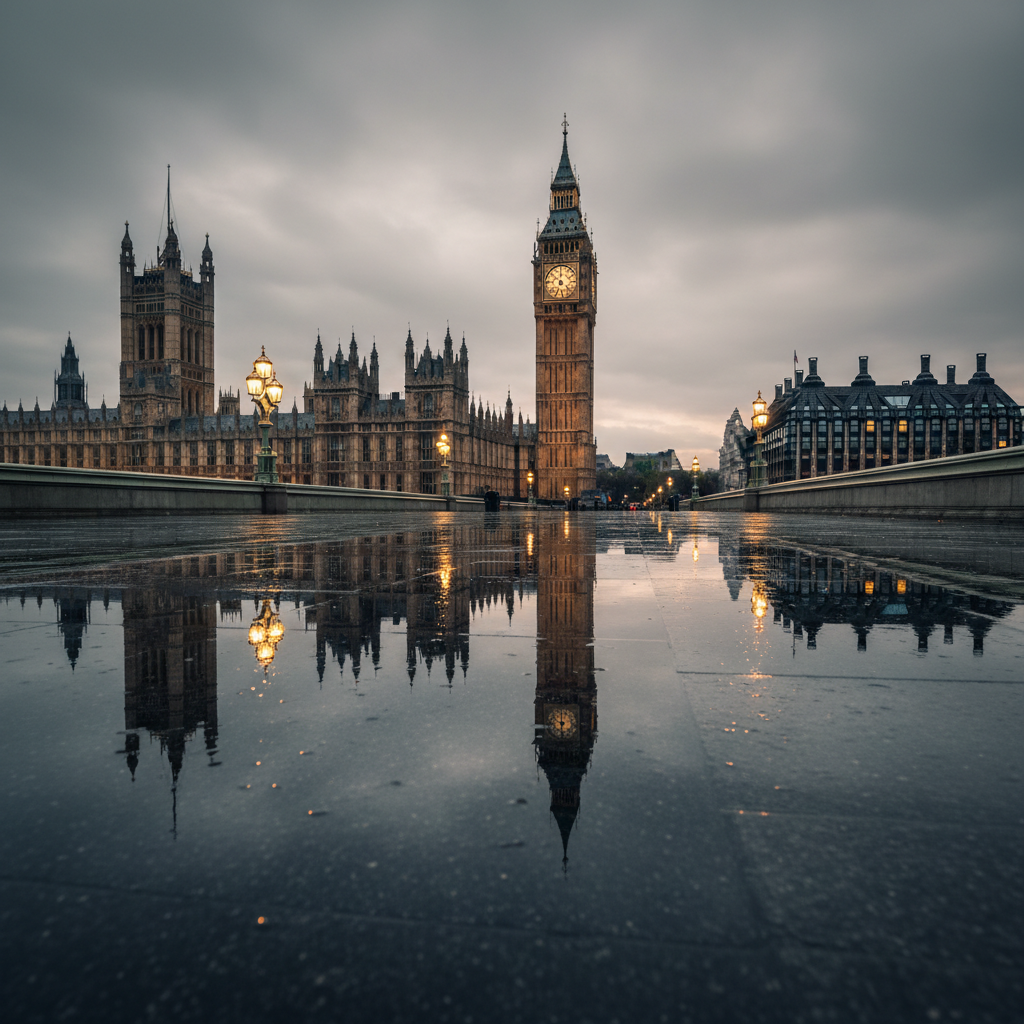
A wide, photographic shot of the Houses of Parliament and Big Ben at dusk, rendered without any people or vehicles, reflected crisply in a rain-slicked embankment surface in the foreground. The sky is heavy and overcast with a faint warm glow near the horizon, while streetlights cast small pools of amber light that glimmer on the wet stone. The camera is positioned low to the ground to emphasise the reflection, creating a dramatic, symmetrical composition. The mood is serious, atmospheric, and slightly tense, suggesting weighty, unspoken debates. The style is clean, high-resolution realism with subdued, professional colours that reinforce the gravity of British political conversations.

Britain’s Faultlines

Long-form reporting that listens across class, culture and region to map Britain’s shared future.

Reviews
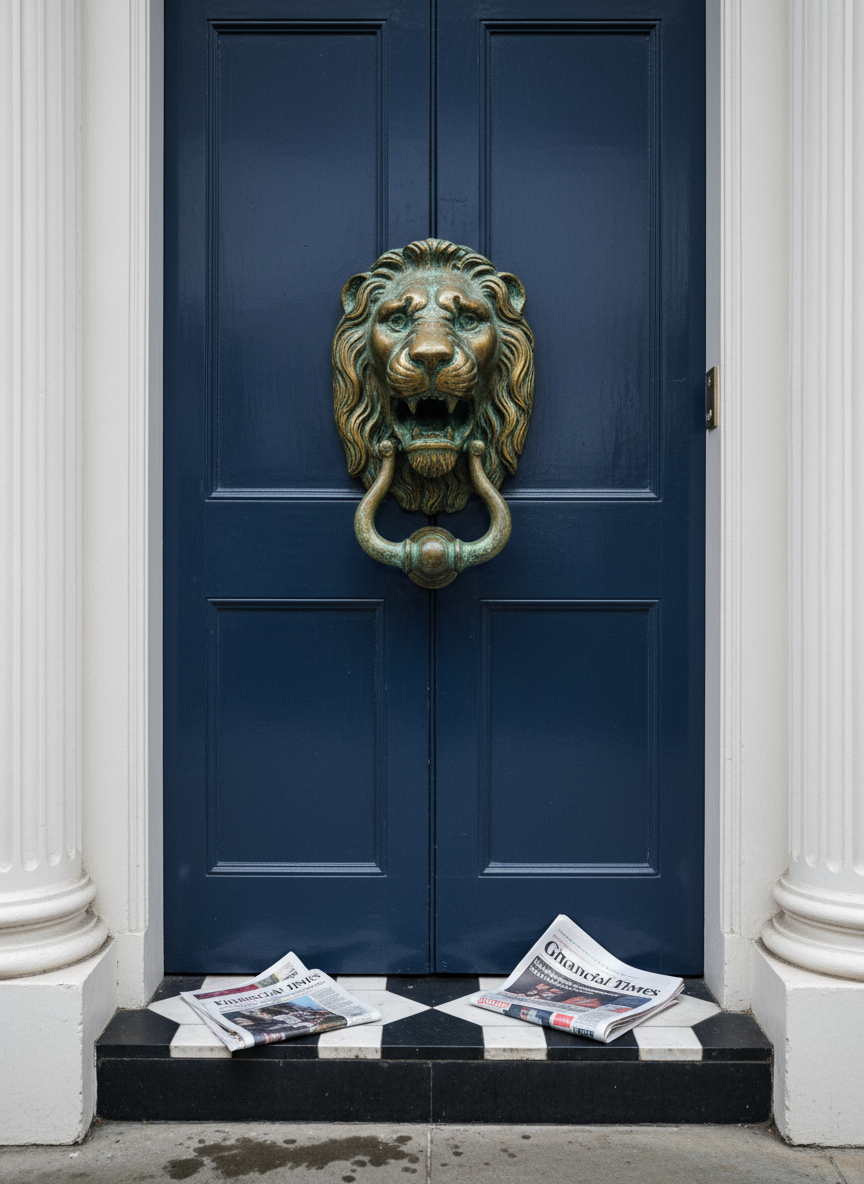
A highly detailed close-up of a weathered brass door knocker shaped like a lion’s head mounted on a deep, dark-blue painted townhouse door, symbolising the entrance to power in British politics. The door is framed by fluted white columns and a black-and-white checkerboard step, with scattered folded newspapers at the threshold. Overcast London daylight creates diffused, cool-toned lighting, casting soft shadows in the lion’s intricate mane. Shot at eye level with a shallow depth of field so the background terrace houses fade into a gentle blur. The mood is serious and investigative, with crisp photographic realism and a clean, modern composition that hints at the conversations happening behind closed doors.

Aya Nakamura

Reading The Public Nerve feels like overhearing Britain’s private arguments, finally spoken aloud with care, nuance and uncomfortable honesty.
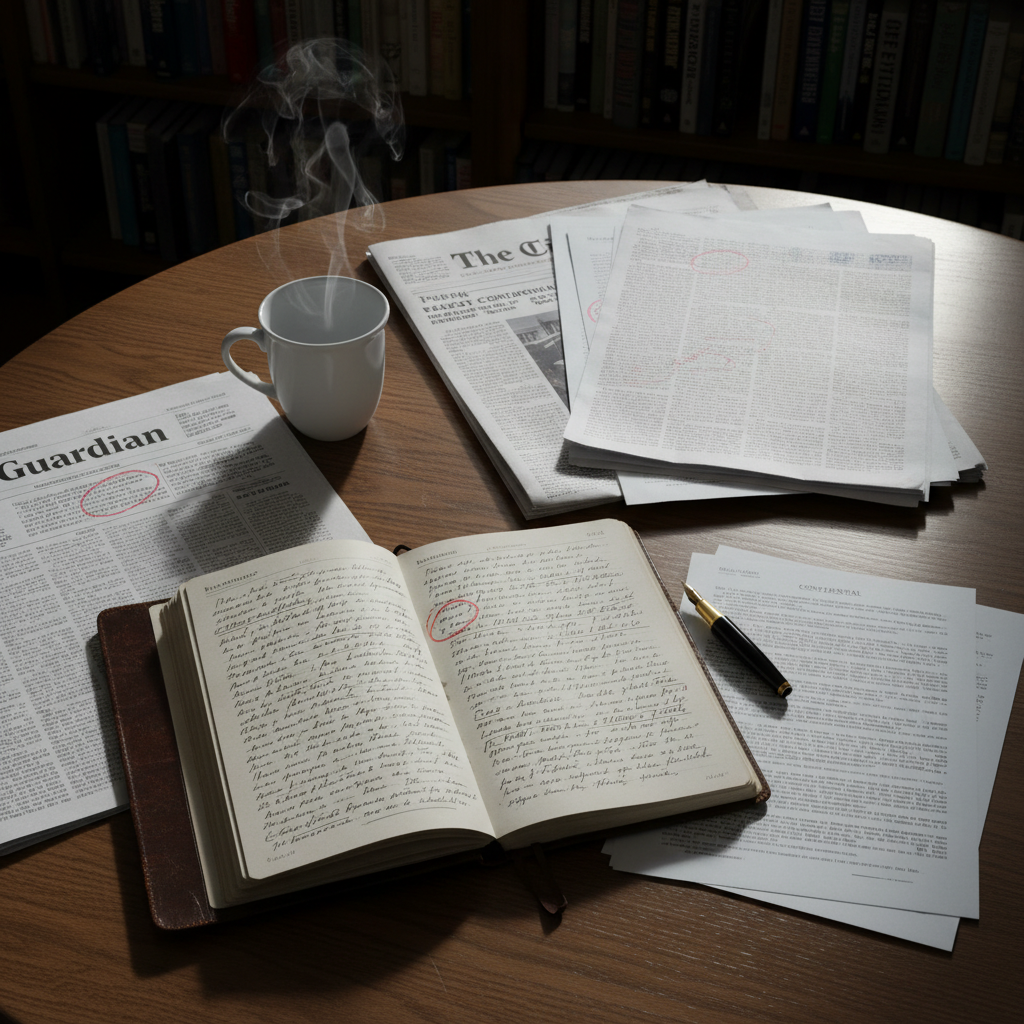
An overhead photographic view of a polished oak table in a quiet study, covered with neatly arranged broadsheet newspapers, annotated policy documents, and a well-used leather-bound notebook opened to a page of dense handwritten notes about British politics. A steaming, plain white ceramic mug sits near the notebook, leaving a subtle ring on the wood. Soft, cool daylight filters in from an unseen sash window, creating gentle, directional light and long, delicate shadows from a fountain pen and paper edges. The mood is analytical and contemplative, with sharp focus and minimal clutter. The composition follows the rule of thirds, conveying a professional, investigative newsroom aesthetic without any human presence.

Mateo García

These essays sound like my family WhatsApp: clashes, jokes, fears, but woven into stories that suddenly make political rows make sense.